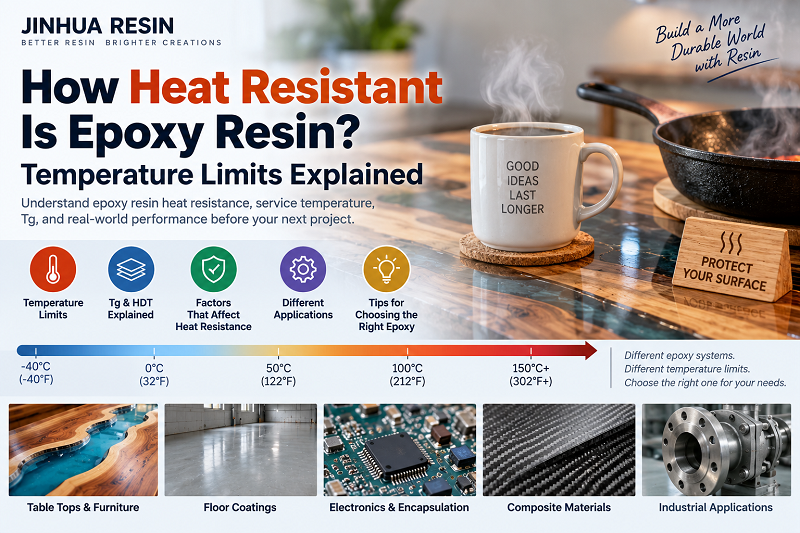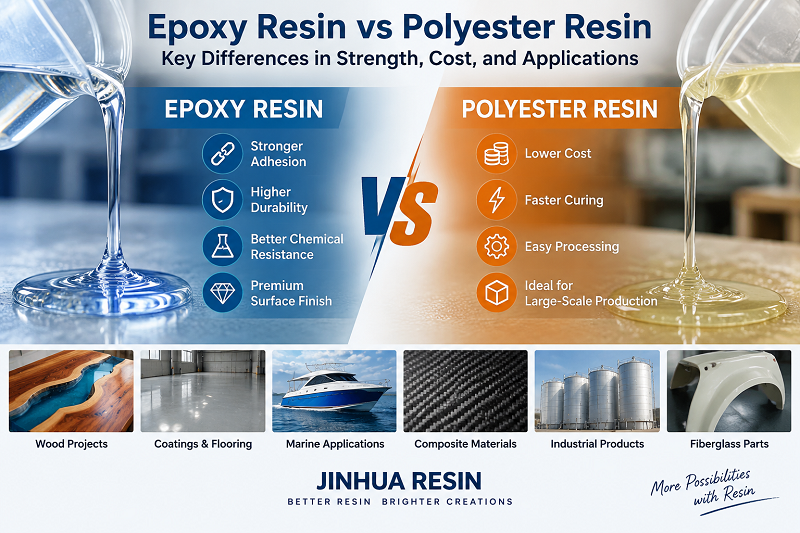


Epoxy Resin Manufacturers In China

Top Epoxy Resin Manufacturers in China | Best Epoxy Resin Suppliers Guide

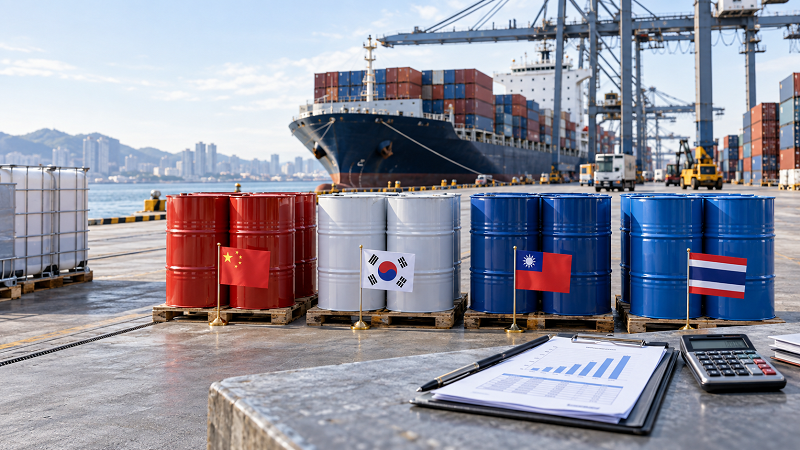
China is the world’s largest producer of epoxy resin, accounting for over 60% of global output. For many distributors, purchasers and brand owners, sourcing epoxy resin from China often offers highly competitive pricing, stable supply capacity and flexible customized services. Therefore, if you are in the epoxy resin industry, you cannot afford to ignore China’s top epoxy resin enterprises.

This article focuses on introducing China’s top epoxy resin manufacturers, hoping to help you with reference when selecting suppliers.

Epoxy Resin Manufacturers In China

Brief Comparison of Well-Known Epoxy Resin Manufacturers Covered in This Article

ManufacturerMain ProductsCore Advantages
Jiangsu Sanmu GroupLiquid epoxy resin, curing agentsLarge-scale production capacity
Nantong XingchenIndustrial epoxy resin systemsStrong R&D capability
Kingboard ChemicalElectronic-grade epoxy materialsLeading in the electronics industry
Chang Chun PlasticsHigh-performance epoxy resinSemiconductor materials
Huizhou Jincheng ChemicalLeading OEM/ODM epoxy resin systemsPrivate brand customization

Jiangsu Sanmu Group

Jiangsu Sanmu Group is one of China’s largest epoxy resin producers. It mainly manufactures liquid epoxy resin, solid epoxy resin and various curing agents, with products mainly applied in coatings, adhesives and composite materials industries.

Nantong Xingchen Synthetic Material Co., Ltd.

Nantong Xingchen is renowned for high-performance epoxy resin products and strong R&D strength. Its products are mainly used in industrial coatings and electrical insulation materials, providing material solutions for multiple manufacturing industries.

Kingboard Chemical Holdings Limited

Kingboard Chemical is a key supplier in the electronic materials sector. Its epoxy resin is mainly used in electronic copper clad laminates and PCB production. With a complete industrial chain layout, Kingboard enjoys strong competitiveness in the electronic materials industry.

Chang Chun Plastics Co., Ltd.

Chang Chun Plastics has multiple large production bases in China, mainly producing high-end epoxy resin materials for electronics and semiconductor packaging. Its products are widely used in PCB and electronic packaging fields.

Guangdong Jinhua New Material Technology Co., Ltd.

Huizhou Jincheng Chemical is a manufacturer specializing in OEM/ODM epoxy resin production, and is a leading player in the OEM/ODM sector, mainly serving global distributors and brand customers. Its products cover a wide range of applications, including DIY craft epoxy resin, river table deep-pour resin, epoxy floor coatings, industrial coating systems, electronic packaging, etc.

With automated production lines and a stable raw material supply system, Jinhua ensures consistent product quality, while supporting private brand customization and formula development.

How to Choose a Reliable Chinese Epoxy Resin Manufacturer?

If you are currently evaluating Chinese epoxy resin manufacturers, you can assess them from the following aspects:

  1. Production Capacity: Production capacity is the most fundamental and critical capability of a factory. Stable and large-scale production capacity guarantees a steady supply for your brand or enterprise during periods of rapid growth.
  2. Product Quality: Product quality is the “lifeline” of all brand owners; thus, product quality is crucial. Reliable epoxy resin manufacturers establish strict quality control systems and inspect each batch to ensure qualification before delivery to brand owners.
  3. R&D Capability: Epoxy resin has a wide range of applications, so the needs and markets of different brand owners vary. Excellent epoxy resin manufacturers customize and develop formulas according to diverse demands and market requirements.

Frequently Asked Questions (FAQ)

  • Who are the largest epoxy resin manufacturers in China?Well-known enterprises include Jiangsu Sanmu Group, Nantong Xingchen, Kingboard Chemical, Jinhua New Material and other Chinese manufacturers.
  • Can I have a private brand for epoxy resin?Yes. Many Chinese epoxy resin manufacturers provide OEM and private brand production services.
  • Is epoxy resin produced in China reliable?Many Chinese factories are equipped with modern production facilities and have long exported epoxy resin products to Europe and North America.
  • What are the main applications of epoxy resin?Epoxy resin is widely used in coatings, floor systems, electronic materials, adhesives, composite materials and woodworking industries.

Conclusion

China’s epoxy resin industry has become a global leader, and is rapidly transforming toward high-end, green and globalized development. Driven by emerging industries such as electronics, wind power and aerospace, it boasts broad development prospects.

For enterprises seeking to source or cooperate on epoxy resin in China, we hope the enterprises listed in this article will assist you in making your choice.

Oem Epoxy Resin Supplier For Distributors Your Trusted Partner For Private Label Success

OEM Epoxy Resin Supplier for Distributors: Your Trusted Partner for Private Label Success

In the highly competitive epoxy resin market, distributors commonly face a challenge: how to source high-quality and highly customizable products that align with their own brand positioning, meet diverse customer needs, and ensure a stable supply chain. The OEM cooperation model of epoxy resin manufacturers precisely meets all distributors’ requirements, minimizing production costs while providing customized formulations, private label manufacturing, and full-process production support.

Among many high-quality partners, Jinhua has become a leading OEM/ODM epoxy resin manufacturer trusted by distributors worldwide, thanks to its mature epoxy resin manufacturing strength, professional R&D and production capabilities.

Oem Epoxy Resin Supplier For Distributors Your Trusted Partner For Private Label Success

Why Distributors Choose Epoxy Resin OEM Suppliers

Epoxy resin has an extremely wide range of applications, from handicrafts: DIY crafts, woodworking, river tables; to flooring and anti-corrosion coatings, electronic potting, marine vessels, industrial bonding and many other fields. Distributors do not need to invest a lot of capital in building factories, purchasing equipment or hiring chemical engineers. They only need to focus on brand promotion, sales channels and market expansion, while production is handled by professional manufacturers, greatly reducing the entry barrier and startup costs in the epoxy resin industry.

At the same time, cooperating with an epoxy resin OEM manufacturer brings multiple advantages.

  1. Build your own brand and achieve differentiated competitionIn a market with severe homogeneity, ordinary epoxy resin products can hardly gain popularity. The OEM cooperation model allows distributors to build their own exclusive brands, supporting private label customization, exclusive packaging and differentiated formulations. They can independently design product labels and select specifications (from small-package DIY kits to industrial large drums), creating distinctive branded products that customers are more likely to remember and trust compared with ordinary products.
  2. Customize formulations to precisely match the needs of segmented marketsDifferent industries and customers have vastly different requirements for epoxy resin, such as transparency, curing speed, viscosity, hardness, high temperature resistance, UV resistance, chemical corrosion resistance, etc. Cooperating with an epoxy resin OEM manufacturer, whether distributors need fast-drying resin for hand DIY, high temperature resistant formulations for industrial equipment, or high transparent crystal resin for river tables, targeted development can be carried out to create differentiated products that make customers remember you more easily.
  3. Reduce startup costsStarting a business in any field is risky, so most people want to reduce their entrepreneurial risks, and the OEM cooperation model is undoubtedly the best choice.Building an epoxy resin production factory requires very high investment, including: reaction kettle equipment, mixing and filling production lines, laboratory testing equipment, professional technicians. Through OEM cooperation, the factory already has these production conditions, allowing distributors to quickly enter the market at a lower cost.

What Strengths Should a High-Quality Epoxy Resin OEM Supplier Have?

The capabilities of different epoxy resin factories vary greatly, so not all epoxy resin manufacturers can meet distributors’ needs. We should focus on the following points when selecting partners:

  1. Production strengthA reliable epoxy resin manufacturer must have guaranteed production capacity, ensuring stable supply capacity when distributors develop rapidly. Jinhua has a 20,000 ㎡ modern production base, equipped with 20 fully automatic production lines and 6 exclusive ODM/OEM manufacturing lines, with a monthly production capacity of up to 1,000 tons. It can not only meet the stable supply of small and medium-sized regional brands, but also support large-volume orders of large multinational distributors.
  2. Professional R&D team and customized formulation servicesA reliable epoxy resin manufacturer has excellent R&D and formulation customization capabilities. As we all know, the epoxy resin field covers a wide range of application scenarios, and customers have various requirements, so R&D and formulation customization are particularly important. Products suitable for distributors’ regions can be formulated according to the market where we are located.
  3. Strict quality control and global compliance certificationsQuality is the lifeblood of distributors, so epoxy resin products have very high stability requirements. Poor quality control may lead to product problems such as yellowing and incomplete curing. A reliable epoxy resin manufacturer conducts multiple quality tests, such as viscosity test, curing time test, hardness test, transparency test, etc.; stable quality is an important foundation for protecting distributors’ reputation.
  4. Complete one-stop OEM/ODM and private label supportAn excellent epoxy resin manufacturer’s OEM/ODM service system is built around distributors’ needs, providing full-chain support from products to brands:Formulation customization: Adjust key properties such as transparency, curing speed and viscosity according to market demandPrivate label manufacturing: Support customized label, logo and product instruction design and printingPackaging customization: Optional DIY small packages (8oz/16oz/32oz), gallon drums, 5-gallon drums, 20kg industrial large drums and other specificationsTechnical documents: Provide complete TDS technical specifications, SDS safety specifications and various compliance certificatesFlexible MOQ: Set low minimum order quantity for newly cooperating distributors, and support large-scale production expansion
  5. Global service experienceRequirements for products vary greatly across different countries and regions, so global service experience is very important. Jinhua has more than ten years of export experience, with products exported to more than 40 countries and regions worldwide, covering mainstream markets such as North America, Europe, Asia and Australia. It is familiar with local market trends, regulatory requirements and distributors’ pain points, and can provide localized adaptation solutions. At the same time, it provides 24-hour technical response service to assist distributors in solving product application problems, team training and customer consultation.

Why Distributors Trust Jinhua for Cooperation?

Distributors worldwide choose Jinhua as their epoxy resin OEM partner, corely due to three points: stable and reliable, highly customizable, long-term win-win.

  1. Stable production and supply capacityJinhua’s automated production lines, stable raw material supply and strict quality inspection process ensure that each batch of epoxy resin is produced on time, on demand and with stable quality, and also guarantees on-time delivery. For many distributors who need continuous supply and stable inventory, this is a crucial factor and the reason why so many distributors trust Jinhua.
  2. R&D, customization and development on demandJinhua’s flexible OEM/ODM services allow distributors to easily achieve product differentiation. According to local market demand, unique differentiation can be created in exclusive formulations and packaging customization, helping distributors quickly attract customers, increase sales and accumulate loyal users.
  3. Partnership-based cooperation to expand the market togetherUnlike other factories, Jinhua regards each distributor as a long-term strategic partner rather than a simple cooperative relationship. From early formulation development to later after-sales support, it accompanies and assists distributors in expanding the market and achieving sustainable growth, so that distributors always have the most reliable backing in the epoxy resin industry.

Choose Jinhua and Start Your Epoxy Resin OEM Cooperation Journey

For distributors who want to establish or expand their own epoxy resin brands, choosing a reliable OEM supplier is the key to success. Guangdong Jinhua Technology Materials Co., Ltd. relies on years of industry experience, advanced production strength and distributor-centric service model to provide high-quality, customizable epoxy resin products, helping partners achieve both performance and profit growth.

Whether you are a regional small and medium-sized distributor or a global large trading enterprise, Jinhua’s OEM/ODM services can match your personalized needs. From customized formulations, private label production to stable supply and all-weather technical support, Jinhua is your trustworthy epoxy resin partner.

If you are ready to start epoxy resin OEM cooperation, welcome to contact Jinhua to discuss your needs and apply for samples. Let’s build your own brand in the epoxy resin field together.

How To Start Your Own Epoxy Resin Brand?

How to Start Your Own Epoxy Resin Brand?

As the epoxy resin industry develops faster and demand keeps growing, from stunning resin river tables and custom jewelry to durable industrial coatings and garage floors, this versatile material is in high demand—which means there is a huge opportunity to build your own epoxy resin brand. But to be honest, starting any brand is not easy, especially in a fast-growing and relatively mature market. If you are planning to enter this industry, this article may help you on your way to building a brand.

How To Start Your Own Epoxy Resin Brand?

First, you need to clarify your positioning. You need to figure out who you are selling to and what customers really need. In fact, too many people and new brands enter blindly and end up failing.

The epoxy resin market is very large and covers many different application scenarios, so you cannot meet everyone’s needs, especially for a new brand.

Do you want to focus on the epoxy resin DIY field (such as resin art, jewelry, river tables)? Or industrial scenarios (such as contractors needing floor coatings, manufacturers needing adhesives)? Or maybe eco-friendly epoxy resin, or heat-resistant, low-VOC products? For example, if you target DIY enthusiasts, they care about simple 1:1 mixing ratio, bubble-free formula, yellowing resistance, curing time, etc.; if you serve industrial applications, they value durability, chemical resistance, and service life more; there are also construction and floor coating fields. In short, you must identify your target market.

For new brands, it is recommended to start with the DIY field. The DIY woodworking market is usually the easiest to enter. For example, deep pour epoxy resin, table epoxy resin, and products for making jewelry, dried flowers and other artworks are in great demand.

Second, find a reliable epoxy resin manufacturer. For someone new to the epoxy resin industry and wanting to build their own brand, cooperating with a strong epoxy resin manufacturer is undoubtedly the best choice.

You do not need to build a factory to produce epoxy resin, nor do you need to invest a lot of energy in product development, which can effectively minimize startup costs. There are two common cooperation modes: ODM/OEM.

OEM (Original Equipment Manufacturing): the manufacturer produces products according to standard formulas and then puts your brand label on them; private label: the factory has mature products, and you directly sell them under your own brand. For new brands, private label epoxy resin is usually the fastest way to enter the market.

If you have a complete and mature epoxy resin formula, you can cooperate with the factory for ODM. The factory only does contract manufacturing, and the core intellectual property rights of the product still belong to you.

Third, build your brand. Most epoxy resin products have little difference in chemical formulas, but brand image often determines customers’ choices. Customers usually choose products based on the following factors: brand trust, packaging design, market reputation.

First, come up with a memorable brand name and logo that fits your niche. Avoid complex names that are hard to spell and pronounce—people need to find you easily online. For example, if you sell eco-friendly resin, a name like “Green Pour Epoxy” lets customers know your product positioning at a glance. The logo should be simple but eye-catching—industrial brands suit clean lines, while DIY brands can use bright colors.

Next, build your brand story. Many customers buy because of your story. Why did you start this brand? Maybe you were a DIY enthusiast frustrated by low-quality resin; or you were a contractor wanting to make better products for peers. People buy from brands they resonate with—share your story on your website and social media. Be authentic; do not make up unrealistic fancy backgrounds.

Define your Unique Selling Proposition (USP). What makes your epoxy resin better than others? Faster curing time? three times more yellowing resistance? 1:1 easy mixing ratio? Or free technical support? Your USP should be prominently displayed on your website, packaging and marketing materials. For example, if your USP is “24-hour curing bubble-free resin”, make sure anyone visiting your website or e-commerce platform sees it at a glance.

Fourth, establish your sales channels. Once your products are ready, the next step is to build sales channels.

Common sales channels include:

E-commerce platforms: many epoxy resin brands start with e-commerce, such as Amazon, Shopify independent site, Etsy, AliExpress, WordPress independent site, etc. These platforms help you reach global users.

Offline distributors: another way is to sell through distributors, such as hardware stores, woodworking tool shops, craft supply stores, which can bring your epoxy resin brand into the local market.

Some brands focus more on B2B customers, such as furniture factories, woodworking studios, construction contractors. B2B customers usually bring more stable and large-scale orders.

Final step: product iteration and after-sales service. Launching a brand does not mean the end—it is just the beginning.

Great brands constantly collect customer feedback—what do they like? What can be improved? Maybe the curing time is too long, or the packaging is hard to open. Use this feedback to optimize your products.

At the same time, good after-sales service can bring wave after wave of loyal customers to your brand.

Conclusion

The road to building your own epoxy resin brand is full of challenges but also highly rewarding. You may make mistakes along the way, but take it step by step, focus on quality, build a strong brand, and put customers first. Remember, even the biggest epoxy resin brands started small—they just persisted, learned from mistakes, and stayed true to their vision.

The epoxy resin market is growing, and there is a place for you. Whether you sell DIY resin kits to crafters or industrial coatings to contractors, the key is to be unique, reliable and authentic. So grab your notebook, do your research, and take the first step—your epoxy resin brand could be the next big hit in the industry.

Epoxy Resin Formulation Manufacturer

Epoxy Resin Formulation Manufacturer: How to Choose the Right Partner for Your Business

In the field of high-end new materials, epoxy resin is one of the most widely used and irreplaceable materials. From large aerospace composites to small daily necessities, it exists in every corner of our lives, and epoxy resin systems support countless scenarios in our daily life. In the epoxy resin industry, many customers, when looking for suppliers, often do not merely buy an off-the-shelf product, but hope to find an epoxy resin formulation manufacturer that can provide customized formulations according to different application scenarios. Whether it is used for river tables, floor coatings, electronic encapsulation, or industrial composites, different applications have different requirements for resin performance. Therefore, a truly capable epoxy resin formulation manufacturer is not only capable of simple resin production, but also able to tailor complete chemical solutions for different users and applications, achieving a precise balance between strength, durability, curing speed and cost.

Epoxy Resin Formulation Manufacturer

What is an Epoxy Resin Formulation Manufacturer?

Simply put, an Epoxy Resin Formulation Manufacturer is a manufacturer that can develop or produce different epoxy resin formulations according to user needs or application scenarios. For example, according to the location of underground parking garages, it can produce epoxy floor coatings that are waterproof, wear-resistant and anti-slip.

Unlike ordinary resin traders or raw material producers, professional epoxy resin formulation manufacturers focus more on customized system design rather than basic chemical synthesis. Cooperation usually starts with an in-depth understanding of customer needs: application scenarios, viscosity, curing time, color, hardness, flexibility, temperature resistance, chemical resistance and other indicators are all key basis for formulation design. Engineers will select and compound base resins (such as bisphenol A type, bisphenol F type epoxy resins), high-purity curing agents (polyamines, polyamides, modified amines, etc.), reactive diluents and various functional additives to finally achieve precise performance targets. All raw materials undergo strict purity testing to ensure batch stability, which is crucial for industrial mass applications.

So why do you need an Epoxy Resin Formulation Manufacturer?

If you want to build your own brand related to the epoxy resin field, an Epoxy Resin Formulation Manufacturer is absolutely your best choice. Because market competition is becoming increasingly fierce, it is difficult to differentiate in the market by simply selling ordinary epoxy resins. Only products with special formulations can gain a firm foothold in the market quickly. The advantages of having unique formulations are as follows:

Highly customized products can be made to meet your own needs, different from highly homogeneous products on the market. Curing speed, hardness, color, viscosity and construction methods can be adjusted according to actual usage scenarios to fully match customer needs.

Stable quality assurance: Regular enterprises implement strict quality inspection throughout the entire production process, with multiple testing links from raw material incoming to finished product delivery. They have ISO9001, RoHS and other certifications, and some products can also meet special compliance requirements such as food contact.

Full-process technical support: In addition to product supply, complete technical services are provided from formulation selection, on-site construction guidance to troubleshooting and performance optimization.

Stable and reliable supply: Large-scale production workshops and automated batching equipment can ensure consistent quality during large-volume supply, avoiding impacts on customer production caused by raw material fluctuations.

Better overall cost: Through targeted formulation optimization, material waste can be reduced, curing cycles shortened, and service life extended. The overall use cost is lower than that of general-purpose products.

What capabilities should an excellent Epoxy Resin Formulation Manufacturer have?

There are many epoxy resin manufacturers on the market, but few truly possess formulation R&D capabilities. When selecting a partner, you can focus on the following points.

R&D capabilities

An excellent epoxy resin formulation manufacturer must have its own R&D team and laboratory, which can provide users with formulation development, performance testing, stability testing, application testing, etc. at any time, so that when customers put forward new demands, the manufacturer can quickly develop new products.

OEM / Private Label support

Many customers want to build their own brands instead of selling general products. Therefore, whether the manufacturer supports OEM or private label is very important. Common services include: customized product formulations, customized packaging, brand label private labeling, and technical data support, which are crucial for cross-border e-commerce sellers and brand owners.Stable production capacityStable production capacity is the most important key factor for a factory. Because no matter how good the formulation is, unstable production makes long-term cooperation difficult. Reliable manufacturers usually have: automated production lines, strict quality control, stable raw material supply, and batch consistency management. This ensures consistent performance of each batch of epoxy resin and avoids after-sales problems for customers.

Application experience: Experienced epoxy resin formulation manufacturers usually serve multiple industries, such as woodworking and river tables, architectural flooring, electronics industry, industrial coatings. Such application experience can help customers find suitable product solutions more quickly.

As competition in the epoxy resin field becomes increasingly fierce, only by finding a suitable epoxy resin formulation manufacturer can enterprises develop products that truly meet market demand and establish their own advantages in the highly competitive epoxy resin market.

Deep Pour Epoxy (2)

What to Look for in a Deep Pour Epoxy Supplier for River Table Projects

River tables have become hugely popular in woodworking and home décor thanks to their stunning appearance. Both DIY enthusiasts and professional furniture makers use deep pour epoxy to create this unique tabletop effect. Clear resin paired with natural wood, along with additives and substrates, produces a beautiful “river” visual that looks premium and natural. Many customers are willing to pay a premium for a custom river table.

Deep Pour Epoxy (2)

However, the quality of epoxy resin is critical for river table making. Some resins cure too quickly and crack; others lack clarity and ruin the finish; some even yellow severely. Therefore, choosing a reliable deep pour epoxy supplier is essential if you plan to make a river table.

Below, Jinhua shares practical tips on what to look for when selecting a deep pour epoxy supplier.

The key feature of epoxy for river tables is thick‑pour capability. Most tabletops are 1–2 inches thick, sometimes over 4 inches. Resin not formulated for deep pouring will almost certainly fail. High‑quality deep pour epoxy typically offers:

  • A single pour thickness of 2–4 inches (some up to 8–12 inches)
  • Slow curing speed
  • Low heat generation
  • Resistance to cracking and bubbling

Many standard tabletop epoxies only work for thin coats of 3 mm–10 mm. Using them for river tables will almost always cause cracking or excessive heat. Standard table epoxy can be used as a topcoat after full curing to extend the table’s service life.

Always ask your supplier three critical questions:

  1. What is the maximum pour thickness?
  2. How long is the curing time?
  3. Is it specifically designed for river table projects?

If the supplier gives vague answers, they are likely not a professional deep pour epoxy provider.

River tables rely on a crystal‑clear look. Top‑grade deep pour epoxy must offer high transparency. Poor clarity or early yellowing will destroy the visual effect.

Trustworthy deep pour epoxy suppliers usually include UV stabilizers in their formula to significantly slow yellowing. When choosing a supplier, confirm:

  • Whether UV stabilizers are added
  • Whether anti-yellowing test reports are available
  • Whether long‑term application examples can be provided

High‑quality resin can maintain excellent clarity for years.

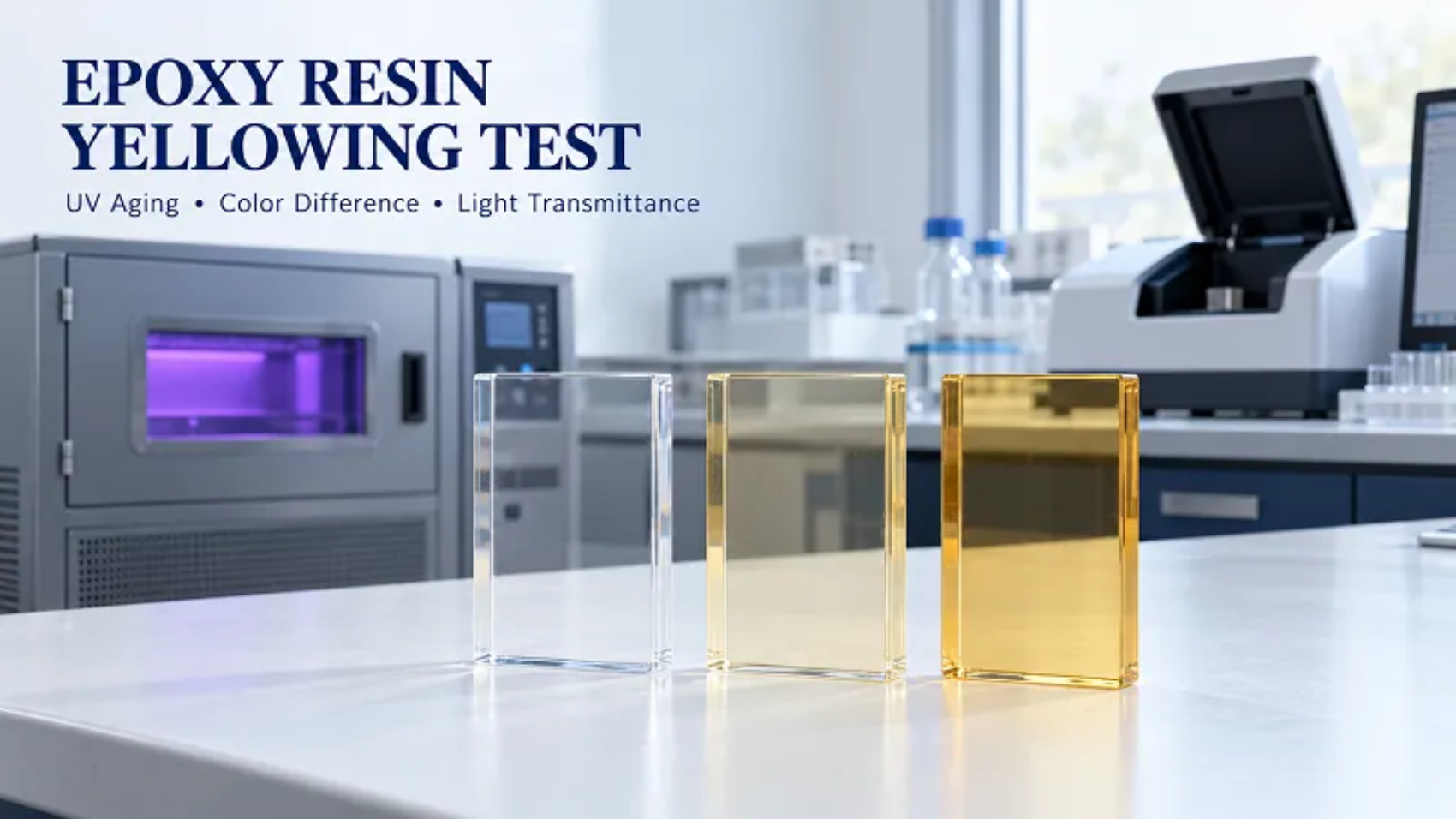
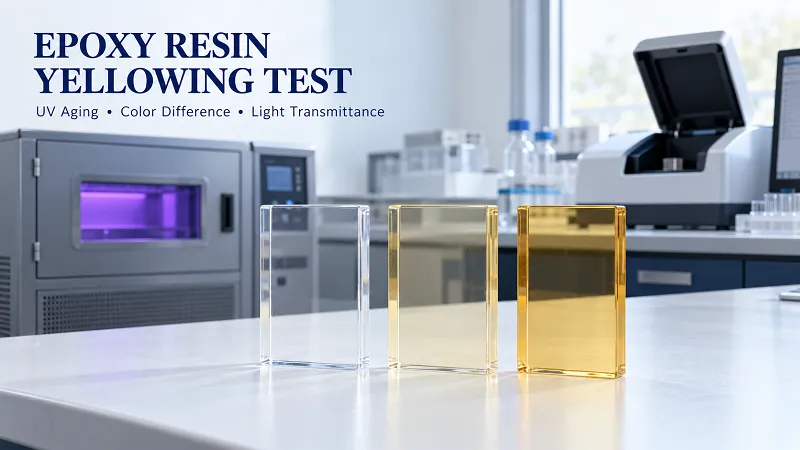
Important note: NO epoxy resin — regardless of brand or formula — can stay 100% yellow‑free forever. But premium products greatly delay the yellowing process. Any brand claiming “zero yellowing” is misleading you.

Bubbles are one of the most frustrating issues in river table making. Poor resin formulas create heavy bubbling, leaving the table looking like “frosted glass.” Top deep pour epoxy suppliers prioritize optimized defoaming formulas.

Quality deep pour epoxy generally features:

  • Low viscosity
  • Strong self‑defoaming ability
  • Long working time

Low‑viscosity resin allows bubbles to rise and escape more easily, greatly reducing leftover bubbles. Professional woodworkers often prefer low‑viscosity deep pour epoxy for this reason. Reliable suppliers also provide useful application tips:

  • Using a heat gun or torch to remove bubbles
  • Controlling ambient temperature
  • Pouring in layers

These tips are extremely valuable for beginners.

Great deep pour epoxy suppliers also provide strong technical support and after‑sales service. During river table construction, issues often arise: over‑thick pouring, wood bubbling, curing time control, and more. Professional suppliers offer:

  • Detailed instructions
  • Application videos
  • Technical consulting
  • Responsive after‑sales support

This help is vital for new users and prevents many common mistakes.

For brands manufacturing river tables, resin alone is not enough — many want to build their own brand. Choosing an epoxy manufacturer that supports OEM/ODM is highly important. Professional epoxy suppliers can provide:

  • Private labeling
  • Custom packaging
  • Custom formulas
  • Brand contract manufacturing

This is key for distributors and brand owners, as a stable supplier supports long‑term product line development.

One final critical point: many buyers focus only on price. But the cheapest epoxy is often the most expensive — a failed project wastes resin, expensive wood, and valuable time. We recommend prioritizing cost performance, not just the lowest price.

In conclusion, as river tables grow more popular worldwide, demand for deep pour epoxy continues to rise. For woodworkers and furniture makers, a dependable epoxy supplier drastically improves project success rates.

Jinhua has 20 years of R&D experience in epoxy resins, with a team of over 30 formula engineers and a factory spanning thousands of acres. We are the ideal partner for building your epoxy resin brand.

Oem Vs Odm Epoxy Resin What's The Difference 1

OEM vs ODM Epoxy Resin: What’s the Difference?

When we want to enter the epoxy resin industry and build our own brand, we will most likely encounter two common terms: OEM and ODM. Many epoxy resin manufacturers offer both service models. Many people often mistake these two models for similar production models, but this is not the case. They represent two completely different cooperation models, and choosing the right cooperation model is crucial for future development.

Oem Vs Odm Epoxy Resin What's The Difference 1

In the epoxy resin industry, what exactly do OEM and ODM mean?

OEM (Original Equipment Manufacturing) is a simple and direct cooperation model. You (the brand owner) provide the complete design plan, technical parameters and formula requirements, and the manufacturer strictly produces the product according to your instructions. You can understand it as “custom production” — the formula, performance, packaging and brand image of the product are entirely under your control, while the epoxy resin manufacturer is only responsible for the production process, quality control and batch consistency.

Simply put, OEM means the formula, product design and brand all belong to you (the brand owner), and the factory only acts as a production partner, just like Apple iPhones: the core technology belongs to itself, and production and assembly can be outsourced to factories.

Let me give a simple example. You have developed an exclusive desktop epoxy resin formula or a specific deep pour epoxy resin formula and want to sell it under your own brand. You find an epoxy resin manufacturer providing OEM services to produce this exclusive formula, affix your brand logo, and meet your production demand. The manufacturer’s role here is purely execution — they do not participate in design or formula development, but only produce, package and deliver your product. This model is very suitable for brands with their own R&D team, clear product parameters, and a desire to fully control product characteristics.

ODM (Original Design Manufacturing) is a one-stop solution. In this model, the epoxy resin manufacturer takes the lead in product design and R&D, responsible for the whole process from formula to packaging. You (the brand owner) are only responsible for labeling and selling. The ODM model is very common in the epoxy resin industry, especially suitable for newly started brands. It reduces R&D time and cost, quickly launches your own brand to the market, and then reasonably adjusts your business model according to market feedback.

Simply put, ODM means the factory is responsible for design and R&D, while you (the brand owner) only label and sell.

It is not difficult to see that the core difference between OEM and ODM lies in who is responsible for the core technical design and R&D process of the product.

In the OEM model, you own the design and parameters, and the manufacturer is only a production partner; in the ODM model, the manufacturer owns the technical design and R&D.

To distinguish in one sentence:

  • OEM: You design, factory produces
  • ODM: Factory designs, you label

There is another core element: in the OEM model, intellectual property belongs to your brand. The factory cannot sell your product to other brands. In the ODM model, intellectual property belongs to the factory. Under the ODM model, the factory has the right to resell the product you cooperate on to other brands for labeling. Of course, you can pay a large sum of money to buy out the patent of this product.

When choosing between OEM and ODM, you may ask yourself three questions:

Do you have a clear product design or formula?

Do you have an R&D team?

Do you need a unique product that can distinguish you from competitors?

If the answers to all three questions are yes, then OEM may be more suitable for you. If you want to save time and cost, or have no internal R&D capabilities, ODM is definitely a more practical choice.

Here is a fun fact: many successful brands use a mix of OEM and ODM. Because developing a new product requires a lot of time and capital investment, many brands only have 1–3 OEM products, while ODM products expand their product portfolio to cover more user groups.

Epoxy resin manufacturers play a key role in both models. With professional technical capabilities, production capacity and quality control, they provide reliable products for the market. When choosing a partner, we should prioritize manufacturers with a good reputation in the field (whether industrial epoxy resin, DIY crafts or marine applications). At the same time, verify whether they can meet your customization needs, comply with international standards (such as RoHS and REACH), and ensure consistent batch quality.

In summary, OEM and ODM are two completely different cooperation models suitable for different business needs.

OEM provides full control and customized services, suitable for brands with clear vision and R&D capabilities.

ODM provides a one-stop solution, saving time and cost for brands without internal design capabilities.

Many successful brands start with ODM and switch to OEM after growing. As long as you find a reliable epoxy resin production partner, from R&D to large-scale production, building your own epoxy resin brand is easier than you think.

Jinhua has 20 years of R&D and production experience in the epoxy resin industry, providing one-stop OEM and ODM services, and has a good industry reputation among many partners. If you need support and help in the epoxy resin industry, no matter what stage you are in, we can provide corresponding and professional services.

How To Start Your Own Epoxy Resin Brand With Private Label

How to Start Your Own Epoxy Resin Brand with Private Label

These past few years, the DIY trend has really taken off, and with industrial demand for epoxy resin products growing all the time, the global demand for these products has gone up too. Whether you’re making river tables, hand-cast crafts, industrial floors, or encapsulating electronic parts, epoxy resin is getting more and more useful. A lot of people have noticed the business opportunity here and want to start their own epoxy resin brand. But building a production line from the ground up is super expensive—most regular people just can’t come up with that much startup money. The private brand OEM/ODM model has given a lot of ordinary folks a chance; it’s a shortcut for small and medium entrepreneurs. You don’t have to drop a ton of cash on factories or equipment. Instead, you can use the production power of source factories, focus on what you’re good at—brand operation—and easily have your own epoxy resin brand, with way less risk.

How To Start Your Own Epoxy Resin Brand With Private Label

Before you start a brand, don’t rush to find a factory first. Instead, figure out your positioning—ask yourself, “Who is my brand for, and what makes it stand out from the rest?” A lot of people just jump on the OEM bandwagon, thinking “as long as I have products, I can sell them,” but they forget about brand positioning. In the end, they get stuck in the same old competition and have to slash prices to compete, which makes running the business harder and harder. Epoxy resin might seem like just one product, but it actually has a bunch of niche markets—like the DIY craft scene, deep pour casting, industrial uses, and floor coatings. Each of these markets needs epoxy resin with totally different performance. If you nail your positioning, customers will remember you, instead of you getting lost in the crowd of brands.

Once you’ve got your positioning down, the most important step is finding a reliable epoxy resin manufacturer. How strong the manufacturer is will decide if your brand can last long-term. The epoxy resin industry is all over the place—many so-called “factories” are just distributors, with no reaction kettles or testing equipment of their own. The samples they send you might be good, but when you place a big order, things can go wrong. So you’ve got to be careful when picking a manufacturer—here’s what to look for.

First, check their qualifications and strength. A real epoxy resin factory needs a business license, production license, and should be able to provide compliance documents like MSDS and REACH. They should have their own synthetic reaction kettles and testing equipment, be good at developing formulas, have steady production capacity, and keep an eye on quality from the raw materials all the way to the finished products. Second, see how flexible they are to work with. When you’re just starting out, you won’t have big orders, so find a factory that lets you do small trial runs—this way, you won’t end up with a bunch of unsold inventory. Also, check if they can customize things for you, like adjusting formulas or specs to fit your needs, or even helping design your packaging. Finally, check their reputation. Talk to other people in the industry about their experiences with the factory, or go visit the factory in person to see the production environment and how things run. Make sure they can deliver on time and have good after-sales service—that’s what makes a long-term partnership work.

Once you’ve officially teamed up with an epoxy resin manufacturer, don’t just sit back and do nothing—you’ve got to keep a close eye on quality. A lot of entrepreneurs think “OEM means the factory makes the products, and I just sell them,” but they don’t realize that if there’s a quality issue, it’s your brand that gets a bad name. I suggest that during production, either send someone to watch things on-site, or ask the factory to give you production records and test reports for every batch. Pay attention to key things like how thick the product is, how long it takes to cure, and how well it resists yellowing—make sure it’s the same as the sample they sent you. Also, check the packaging and labels carefully. They should match your brand’s style, but also follow national rules—clearly list things like ingredients, how to use it, and safety warnings, so you don’t get into trouble.

After your product launches, it’s time to promote and run your brand—that’s where the OEM model really shines, and it’s how you’ll stand out from other OEM brands. In the beginning, don’t spend a ton on ads. Instead, focus on the people who are most likely to buy your product, and try promoting on e-commerce sites and social media. If you’re targeting DIY lovers, share tutorials and handmade projects on platforms like YouTube, Instagram, and TikTok. Partner with DIY influencers, and use real customer reviews to get more loyal fans. If you’re targeting industrial customers, list your products on B2B sites like Amazon, Etsy, and WordPress independent stores. Polish up your product qualifications and case studies, reach out to decoration companies and electronic manufacturers on your own, and win them over with good, professional service.

Also, don’t overlook customer service and building a good reputation. Epoxy resin is a chemical product, so customers might run into problems while using it—like the product not curing all the way, or not using it right. Get back to customers quickly when they have questions, give them solutions, and even send free samples if needed—this will help keep them coming back. At the same time, listen to what customers have to say: what they don’t like about the product, what they need that’s different. Pass that feedback to the factory so they can improve the formula and the product, and keep your brand getting better. Over time, if you build a good reputation, customers will buy again and tell their friends, and your brand will get more and more popular.

There are also some common mistakes to watch out for. When you work with a factory, make sure you sign a formal contract. Write down what each side is responsible for—like product quality standards, delivery times, after-sales duties, and who owns the intellectual property. Don’t just rely on verbal agreements; that’s how disputes happen later. Also, don’t just go for the cheapest option. Factories that offer super low prices usually cut corners on raw materials and quality checks, and that will only ruin your brand in the end.

If you’re looking to get into the epoxy resin industry, building a private brand through OEM production is a great way to start—it’s not too hard to get in, but there’s a lot of potential. In fact, a lot of the well-known brands we see now got their start this way too. They took it step by step, kept making their products and services better, built up a good reputation little by little, and eventually grew bigger and stronger. As long as your product quality stays consistent, you know who you’re targeting with your brand, and you’re willing to put in a little patience and keep at it, you can absolutely build your own epoxy resin brand—it’s not as out of reach as you might think.

Jinhuaresin1

Join us at the 139th Canton Fair | Together with Jinghua New Materials, let’s usher in a new chapter in global trade.

The 139th China Import and Export Fair (Canton Fair) is about to grandly open! As China’s longest-running, largest-scale, most comprehensive international trade fair with the most complete range of products and the largest number of buyers, the Canton Fair has always been a golden bridge connecting “Made in China” with the global market. This spring, we are full of enthusiasm, showcasing our full range of high-quality products and innovative solutions. We sincerely invite new and old customers and industry partners from around the world to visit us, explore business opportunities, and seek common development!

 This edition of the Canton Fair boasts a vast scale of 1.55 million square meters, 75,500 booths and more than 30,000 participating enterprises, fully demonstrating the strong vitality and innovative strength of China’s foreign trade.

Jinhuaresin1

Phase 1 focuses on core sectors including electronics & home appliances, industrial manufacturing, new energy, hardware & tools, new materials and chemicals, serving as the premier platform for global buyers to source high-quality industrial raw materials, advanced chemical products and innovative technologies.

As a professional manufacturer and supplier with years of deep expertise in epoxy resins and composite materials, we uphold the core values of technological innovation, quality first, environmental protection, and customer orientation.

At this Canton Fair, we will showcase our full range of core product lines and customized solutions at Booth M38, Hall 1.1:High-transparency epoxy resin systems:

Deep Pour epoxy, tabletop epoxy, UV resin, DIY resin, crystal clear adhesive, LED encapsulant, etc.

Featuring high transparency, bubble-free, anti-yellowing, and excellent toughness, they are widely used in river tables, woodworking, large-scale casting crafts, jewelry, and accessories.

One-stop industrial flooring solutions:From primer, mid-coat to topcoat, we provide a full range of flooring materials and construction technical support, including epoxy thin-coating, colored sand flooring, anti-static flooring, non-slip flooring, marble/metallic effect epoxy flooring, polyaspartic coatings, polyurethane coatings, moisture barrier and waterproofing.

Exhibition Information

The 139th Canton Fair (Spring) Phase 1

Dates: April 15-19, 2026 (9:30-18:00 daily)

Location: China Import and Export Fair Complex (382 Yuejiang Middle Road, Haizhu District, Guangzhou)

Our Booth: Hall 1.1, M38

We cordially invite you to visit us at booth 1.1M38!

April 15-19, Guangzhou Canton Fair Complex, Hall 1.1, Booth M38. We have prepared:

A professional technical and sales team to answer your product questions, provide application solutions, and discuss cooperation details.

Abundant product samples, color cards, and application case manuals, allowing you to intuitively experience product quality and application effects.

Whether you are seeking stable and reliable raw material suppliers, technical partners to explore innovative applications, or traders expanding into global markets, Jinghua New Materials looks forward to meeting you at the Canton Fair. Let’s use high-quality products as a bridge and honest service as a medium to jointly explore a broader international market and create a mutually beneficial future!

Weclome to visit our booth and contact us for invitation 

How To Prevent Deep Pour Epoxy Resin From Cracking?

How to Prevent Deep Pour Epoxy Resin from Cracking?

The most troublesome problem during the application of deep pour epoxy resin is cracking. Cracking not only affects the appearance of the entire project, but in serious cases, it can directly render the whole project or work unusable. For beginners who are just getting started, they follow the tutorial step by step, so why do cracks still appear?
Today, Jinhua will analyze the common causes of cracking in deep pour epoxy resin and how to effectively avoid it.

How To Prevent Deep Pour Epoxy Resin From Cracking?


First, the most common cause of cracking: inadequate sealing treatment of the substrate. For example, when making a river table, we use wood, which usually needs to be dried, cleaned, and then sealed. Wood contains a large number of internal pores; if it is poured directly without sealing, the wood will absorb the resin, resulting in uneven shrinkage, bubbles, internal voids, etc., all of which may lead to the appearance of cracks.
Second, the common mistake we often mention made by beginners: the single pouring thickness exceeds the product limit. Many people are eager for quick results (especially beginners), wanting to minimize the number of pours to shorten the project completion time. Each deep pour epoxy resin has a maximum pouring thickness limit. During pouring, we should try not to approach this limit to effectively prevent cracking. Sufficient interval time should be reserved between two pours, generally 6–12 hours, until the previous layer of resin is initially cured and the surface is dry and tack‑free before pouring the next layer.
Third, the mixing ratio of epoxy resin and hardener. There are three points to note here: first, a precise digital scale must be used for weighing to ensure an absolutely accurate ratio; second, after mixing, stir slowly and thoroughly without dead corners to fully blend the epoxy resin and hardener; third, the amount of raw materials mixed at one time should not be too large — the larger the mixing volume, the faster the exothermic speed, and the more likely temperature runaway will occur.
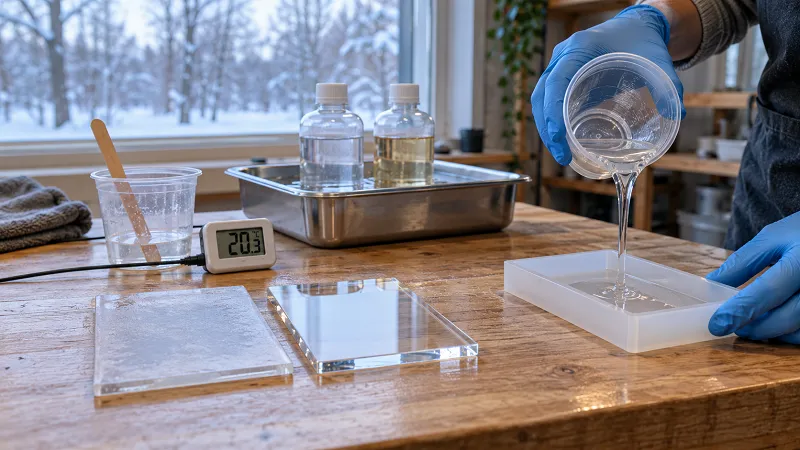
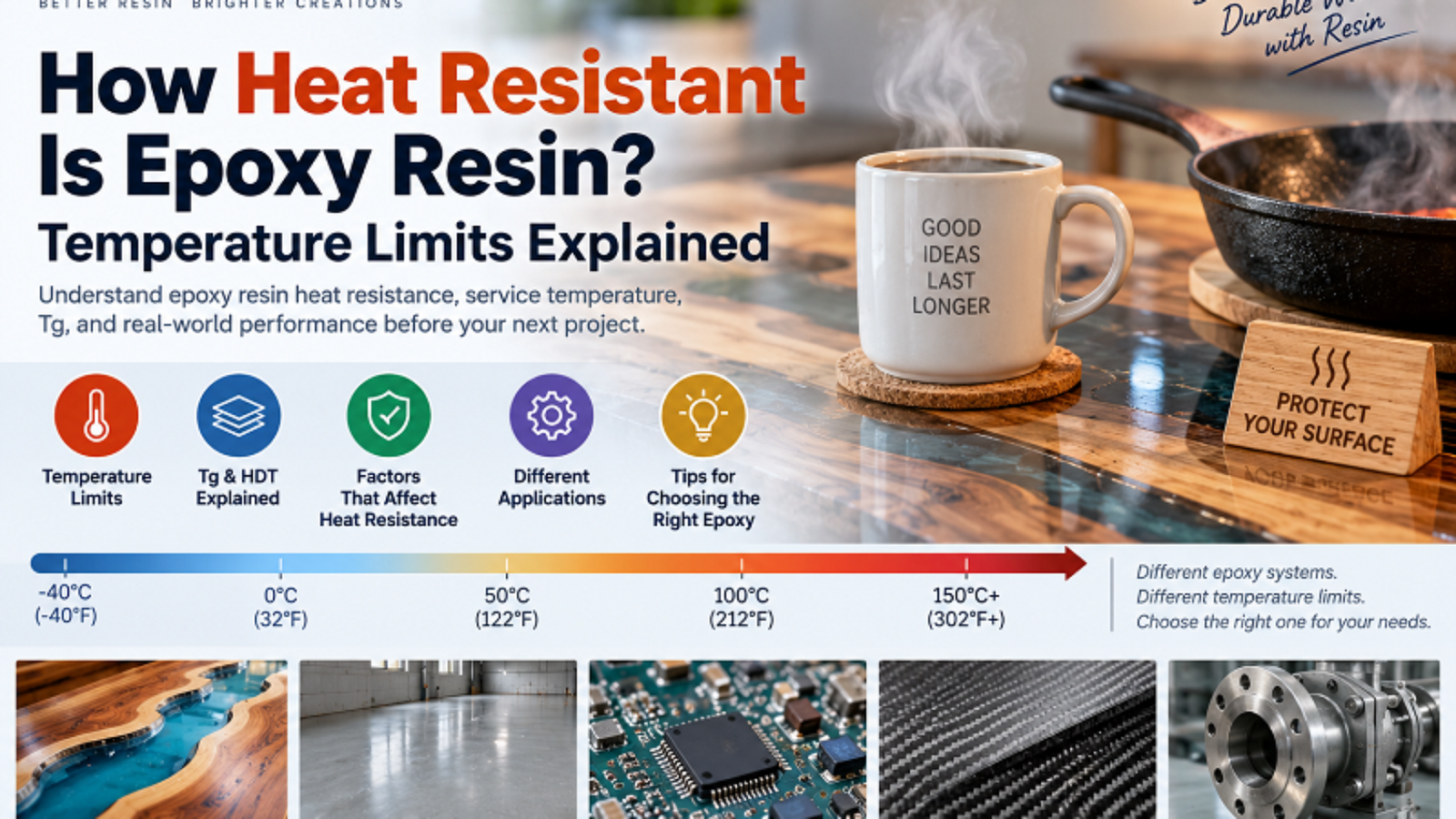
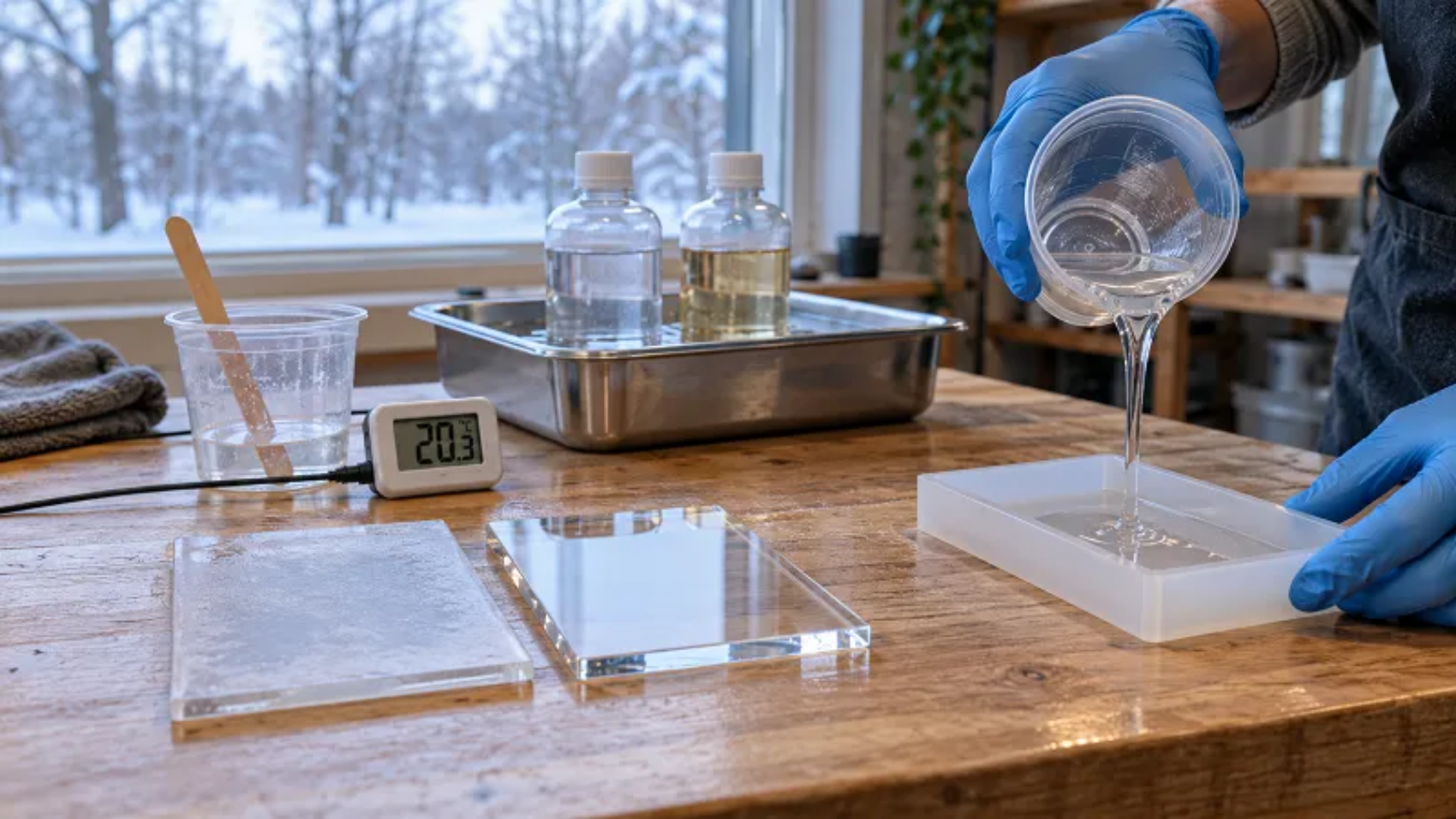
Fourth, the issue we often mention: temperature and humidity. Temperature has a great impact on deep pour epoxy resin. Excessively high temperature accelerates the reaction and causes rapid temperature rise, resulting in cracking. Excessively low temperature prolongs curing time and causes incomplete curing. Excessively high humidity causes internal clouding and poor adhesion. The optimal temperature is between 20℃ and 25℃, with humidity controlled below 70%. A good working environment can greatly improve the success rate of the project.
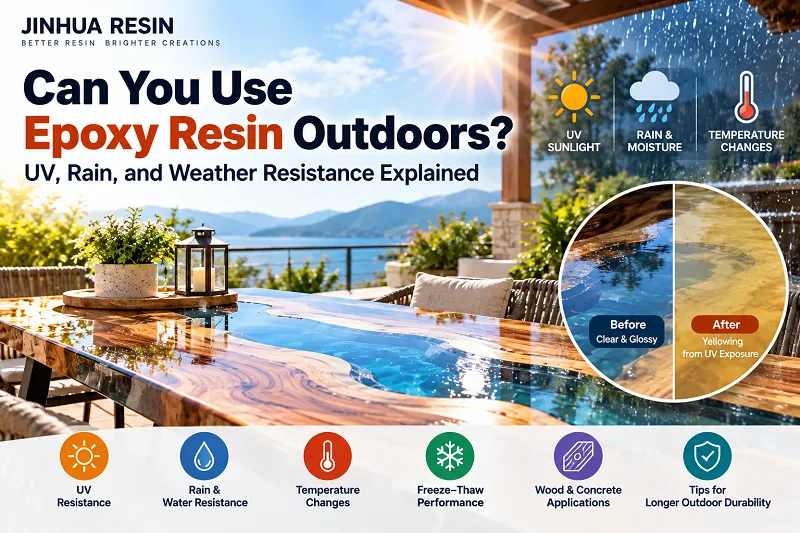
Fifth, we need to allow sufficient curing time for the project. Many people are eager to demold, sand, or apply load once the resin surface is solidified, not knowing that the interior of the resin is not fully cured and the internal structure is still unstable. Premature operation will damage the internal structure and cause cracks. It is recommended to let it stand for more than 48 hours after pouring before demolding, continue curing after demolding, avoid heavy pressure, impact, and sanding within 7 days, and do not place it in a high‑temperature or direct‑sunlight environment to prevent repeated stress from thermal expansion and contraction. Full curing takes about 7 days. Only after full curing should subsequent operations such as sanding and polishing be carried out, so as to ensure the strength and integrity of the epoxy layer and avoid later cracking.
Frankly speaking, most problems encountered with deep pour epoxy resin, such as cracking, bubbles, yellowing, etc., are related to substrate treatment, single pouring, environmental factors, mixing ratio, etc. As long as we grasp the relevant step details, we can improve the success rate of the project.

What Are Common Deep Pour Epoxy Mistakes

What are common deep pour epoxy mistakes?

Deep pour epoxy is a core material for creating resin river tables, artistic tabletops, wood fillers, and large decorative pieces. Many people start with great confidence, but often encounter problems such as bubbles, cracking, overheating, and even curing failure. It’s not as simple as “pouring more resin”—the heat release during curing, internal stress, and bubble control are far more complex than with thin-layer applications. Today, Jinghua will guide you through common mistakes made during the application of deep-pour epoxy, helping us avoid many unnecessary losses.

What Are Common Deep Pour Epoxy Mistakes

First, we must understand that deep-pour epoxy is different from ordinary epoxy. Deep-pour products can typically be poured several centimeters or even thicker in one go, but at the same time, its curing time and heat release reaction are relatively longer and more intense. Many people try to save time by pouring a thickness exceeding the maximum single-pour thickness, completely ignoring the heat release limit. Heat accumulates extremely quickly inside a thick layer, with the center temperature far exceeding the edges, resulting in inconsistent curing speeds and generating enormous internal stress. Minor issues include uneven surface texture and inconsistent hardness; severe issues include cracking and warping. The correct approach is to strictly follow the product instructions, pouring no more than the maximum thickness allowed in a single application (refer to the product’s detailed specifications for specific thickness), such as 2-3cm per layer, with a 24-48 hour interval between each layer, allowing each layer to fully cure and dissipate heat before pouring the next. Layering not only controls temperature but also reduces air bubbles and improves overall strength.

The second common mistake is uneven mixing or incorrect proportions. Thick-layer epoxy resin pours are generally two-component materials: epoxy resin and hardener. Even a slight difference in the ratio of the main component to the hardener will cause curing problems. Some people pour the material by feel or roughly measure it using a regular cup, resulting in too much or too little hardener. Too little hardener will make the resin perpetually sticky and lack hardness; too much hardener will make the adhesive layer brittle and prone to cracking later. Care must be taken when mixing; many people only stir for 1-2 minutes, failing to scrape the resin off the sides and bottom of the container, resulting in uneven mixing. Thick-layer casting involves a large mixing volume, and areas that are not thoroughly mixed will remain uncured for a long time, forming soft spots and sticky surfaces. The correct method is to accurately weigh the mixture using an electronic scale, mix it according to the manufacturer’s ratio, stir for 3-5 minutes, and repeatedly scrape the sides and bottom of the container until the liquid is completely uniform and without any streaks.

The third and most easily overlooked problem is: inadequate substrate preparation and lack of a sealing primer. Thick-layer casting is often combined with wood and stone, such as river tables. Wood is a porous material, and directly pouring resin will continuously release air, forming numerous air bubbles inside the resin. More problematic, dust, oil, and moisture on the substrate surface will severely reduce adhesion, making the resin prone to blistering and delamination later. Before construction, the substrate must be thoroughly sanded, degreased, dust-free, and completely dried. A thin sealing coating must be applied to the wood first to seal the pores and prevent air release and bubble formation. At the same time, the moisture content of the substrate must be maintained; construction should never be carried out if it exceeds 8%, as moisture will cause the resin to turn white and foggy, significantly reducing adhesion.

The fourth common mistake is ignoring ambient temperature and humidity. The construction environment has a significant impact on epoxy resin. If the temperature is too low, the resin’s fluidity will decrease, making it difficult for air bubbles to escape and prolonging the curing time. If the temperature is too high, it may cause the reaction to be too rapid. Excessive humidity may affect the surface finish, leading to whitening or fogging. Normal construction temperature is generally maintained at around 20℃–25℃; humidity should be below 65%.

The fifth common problem is improper air bubble handling. Air bubbles are one of the most common problems in thick-layer casting. Air is introduced during resin mixing and pouring. If not addressed promptly, it will affect the transparency and appearance after curing. The correct approach is to stir slowly at a low speed to reduce air entrainment; after pouring, quickly sweep the surface with a heat gun or flame gun to allow air bubbles to rise and burst. Be careful not to get too close to avoid baking the resin yellow; air bubbles are difficult to rise in thick layers, and layered pouring helps air bubbles escape layer by layer. If possible, placing the resin in a vacuum chamber for degassing shortly after pouring will yield even better results.

The sixth common problem is neglecting the curing time; this is a mistake made by most beginners. Thick layers of epoxy resin require a long time to fully cure. Even if the surface appears dry and hard, the internal reaction may still be ongoing. Many beginners, seeing the surface harden, rush to sand, move, or apply heavy pressure, causing resin deformation, scratches, and even internal cracking. Thick layers should be cured for at least 7 days before light sanding, and full curing to reach maximum hardness typically takes 15-30 days. During curing, avoid exposure to direct sunlight, high temperatures, and heavy pressure. Sanding and polishing should be done gradually. Afterward, avoid scratching with sharp objects and direct contact with high temperatures. Proper maintenance is essential to maintain the translucent texture and prevent yellowing and aging.

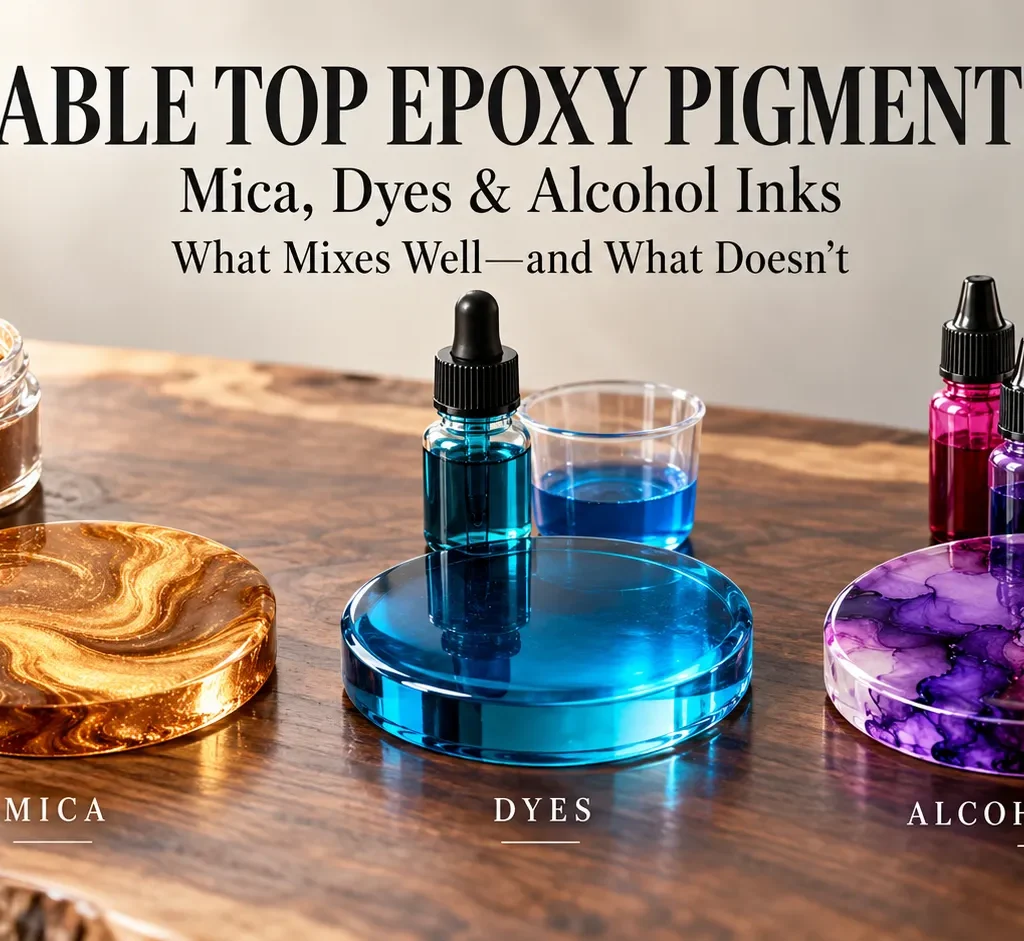
The seventh common problem is using unsuitable pigments; when making large crafts, pigments, colorants, and color pastes are often added to adjust the color and achieve better results. However, adding too much or using unsuitable materials can affect resin curing. For example, some water-based pigments may affect the resin reaction, leading to abnormal local curing. Therefore, when adding colorants, it is best to choose pigments specifically designed for epoxy resins and control the addition ratio.

Thick-layer epoxy resin casting may seem simple, but to achieve the desired effect, we need to pay attention to the details of each step to create a piece that matches our expectations. If you are a beginner, we recommend starting with small-scale projects to gradually familiarize yourself with the material’s properties before moving on to larger crafts.

Finally, if you want to purchase the highest quality, most cost-effective thick-layer epoxy resin casting, please feel free to contact us at jinghua.